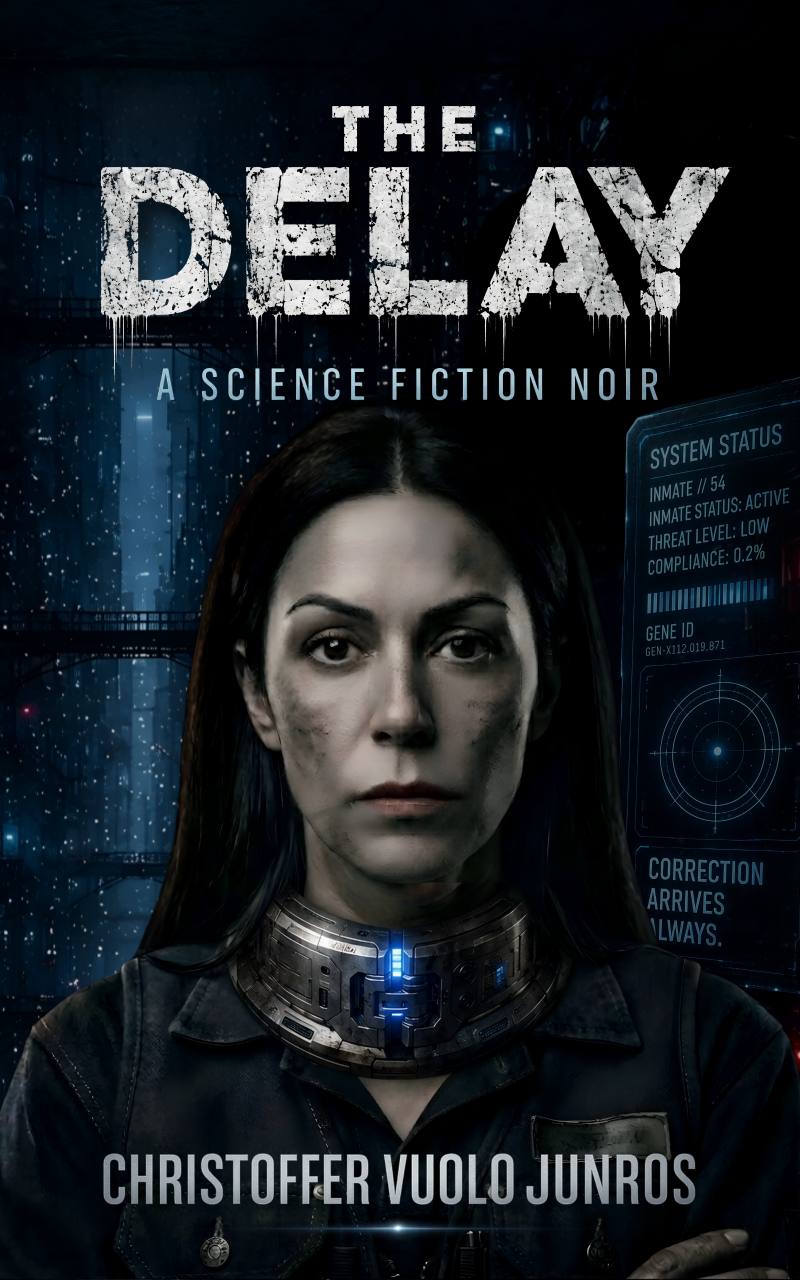
Short Description
A standalone dystopian science-fiction noir about Nash, a prisoner on Serenith, where molten glass falls like rain, records rewrite reality, and freedom may exist only in the delay between action and correction.
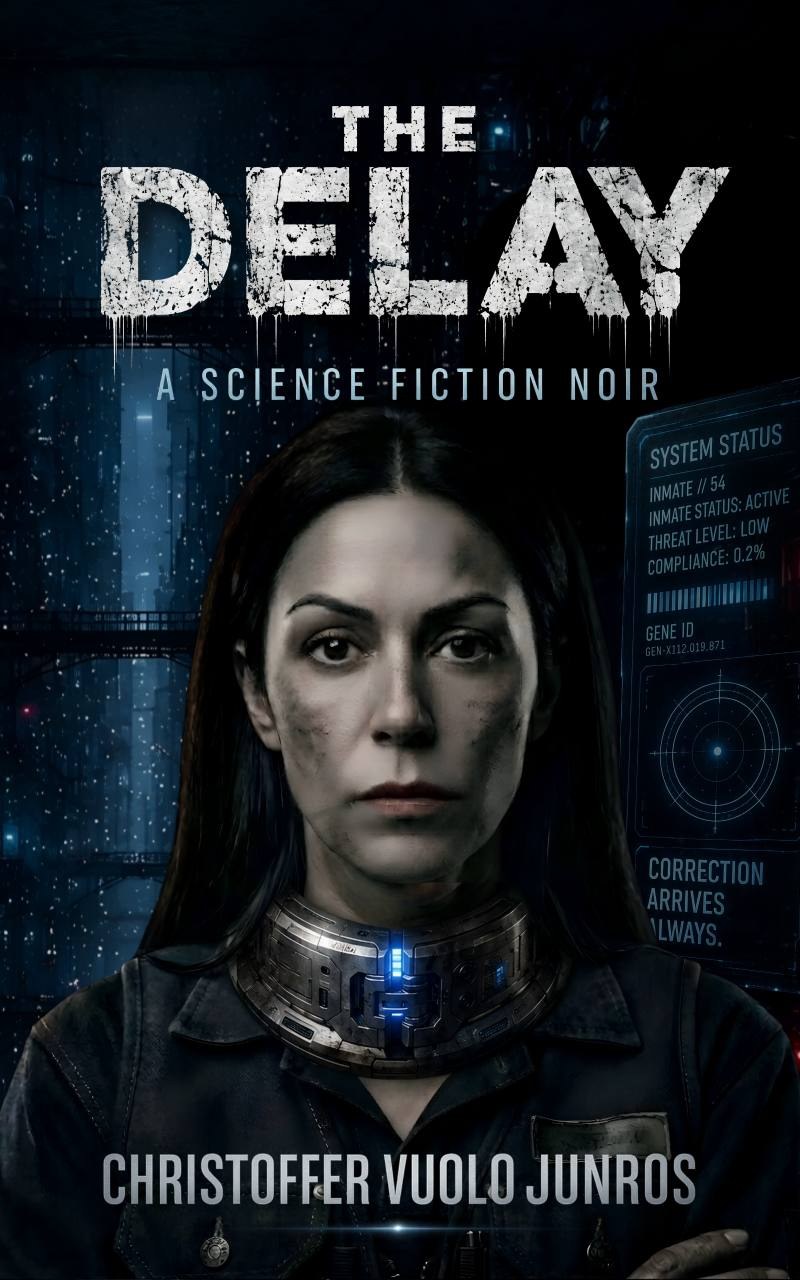
Press kit // book facts // review info
Book details, official descriptions, themes, author information, contact, and downloadable cover art for The Delay.
Book information
A standalone dystopian science-fiction noir about Nash, a prisoner on Serenith, where molten glass falls like rain, records rewrite reality, and freedom may exist only in the delay between action and correction.
Some prisons are built from walls. The worst ones begin long before them.
Paradise is easy to mistake from a distance. Up close, Serenith is a prison world where molten glass falls like rain, storms can strip flesh from bone, and questioning the wrong person can make you disappear without a trace.
After her home is taken, her husband is killed, her brother vanishes, and even her name is no longer her own, Nash is sent to Serenith, a place where people are meant to disappear.
But the deeper Nash searches for her missing brother, the less certain truth becomes. Records contradict themselves. Identities change. People exist one moment and vanish from the official world the next. The city does not simply watch its citizens. It decides what is real.
Between an action and its correction lies a moment of hesitation. A delay. Maybe freedom can exist there.
What remains when a system takes your name and rewrites the record?
Power becomes most dangerous when violence sounds administrative.
Settlement, occupation, and extraction are treated as procedure, not backdrop.
Nash's memory becomes evidence in a world designed to erase witnesses.
Author note
Christoffer Vuolo Junros was born in 1989 and raised in Gothenburg, Sweden. He lives in Stockholm and works as a Senior Engineer at Scania, specialising in vehicle electrification. His fiction is shaped by a fascination with future technology, human potential, and the danger of systems that become more important than the people they were meant to serve.